The Chinese horoscope
The Chinese horoscope
Twelve animals, five elements, a calendar that follows the Moon. Your sign is based on the actual date of Chinese New Year in your birth year, not on January 1: if your birthday falls in January, your animal is often the one from the year before.
For you
Your Chinese sign
…
This year
The Year of the Fire Horse
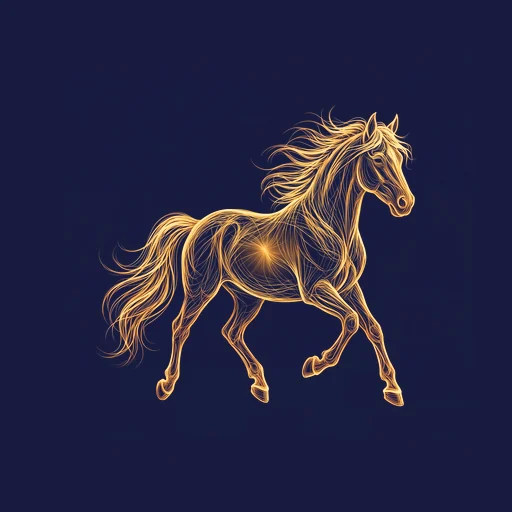
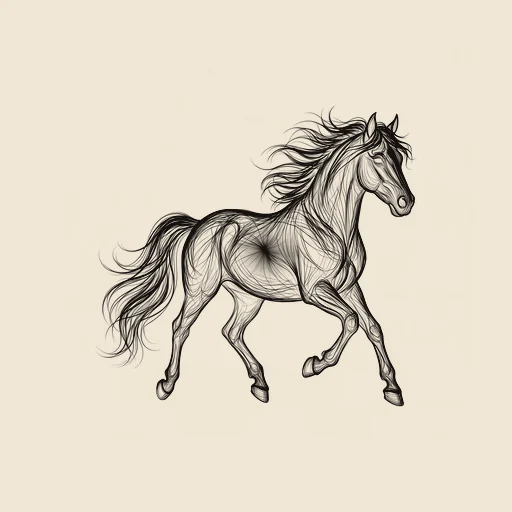
丙午·yang
From February 17, 2026 to February 5, 2027
丙午 · 43rd year of the sixty-year cycle
A Horse year races. Tradition calls it fast, sociable, spendthrift, carried by movement: people travel, get a change of scenery, and get tired too.
Fire gives it brilliance and impatience: what shines, what goes fast, what burns too.
The festivities last fifteen days, from New Year to the Lantern Festival on March 3, 2026.
If your sign is the Horse too, this is your běnmìngnián, the year of your animal, which comes around every twelve years. Tradition calls it a tricky year and advises wearing red all year long, even if it's just a belt or a thread. No need to worry, though: there's no evidence that your animal's year goes any worse than any other.
Next: The Year of the Fire Goat, from February 6, 2027.
The twelve animals
In the order of the Great Race legend. Tap an animal to open its page: its character, its years, its affinities.In the order of the Great Race legend. Click an animal to open its page: its character, its years, its affinities.

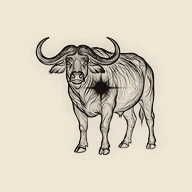
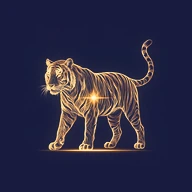
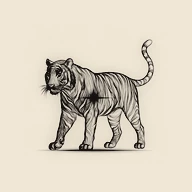
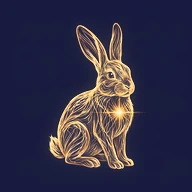
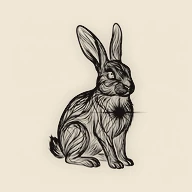
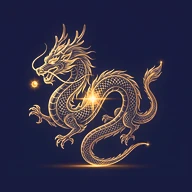
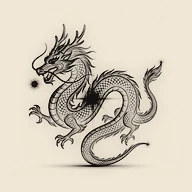
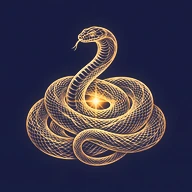
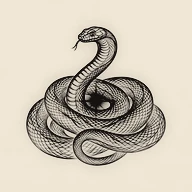
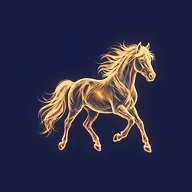
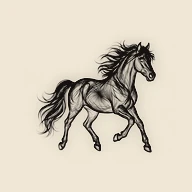
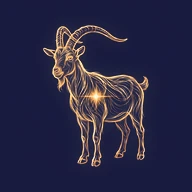
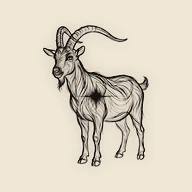
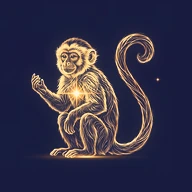
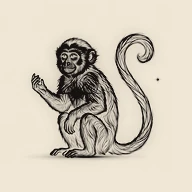
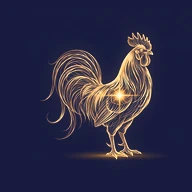
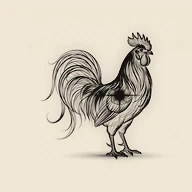
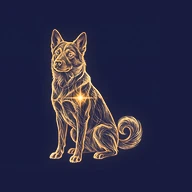
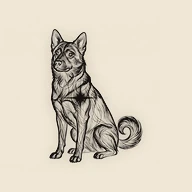
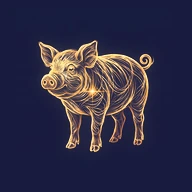
The opposites (liùchōng): six years apart, facing each other on the wheel of the twelve animals. Tradition sees two rhythms that don't sync. Neither impossible nor doomed: it's worth knowing, and talking about together.
Their fixed elements: Water and Fire. The first controls the second: it keeps it in check, and sometimes snuffs it out.
The date, time and place of two births say far more than two animals: that's what chart compatibility compares.
Compare two chartsTraditional affinities, not verdicts. Two people are two whole charts, not two birth years.
Chinese New Year
The Chinese calendar follows both the Moon and the Sun. Each month begins at the new Moon, and the year begins at the second new Moon after the winter solstice, most of the time. That is why the New Year moves: between 21 January and 20 February, never the same day.
Twelve lunar months make 354 days, eleven fewer than a solar year. To stop the drift, the calendar adds a thirteenth month about every three years. In some years that catch-up month falls just before the New Year and pushes it back by one lunation: it will happen in 2034, when the year starts on 19 February although the simple rule would have given 20 January.
The festivities last fifteen days: the family dinner on the eve, the red envelopes, the firecrackers against the Nian, the monster of the legend, then the Lantern Festival at the first full Moon. In China it is called the Spring Festival, chūnjié: the year begins with the season that comes back.
The dates below are checked against the Hong Kong Observatory table.
The coming years
- February 17, 2026Fire Horse丙午
- February 6, 2027Fire Goat丁未
- January 26, 2028Earth Monkey戊申
- February 13, 2029Earth Rooster己酉
- February 3, 2030Metal Dog庚戌
- January 23, 2031Metal Pig辛亥
- February 11, 2032Water Rat壬子
The other boundary: the lichun
The lichun, “start of spring,” is the moment the Sun reaches the halfway point between the winter solstice and the spring equinox: February 3, 4 or 5. The Four Pillars school (bazi) starts the year on that day, not at the New Year. Depending on the year, the lichun falls before or after the New Year: if you were born between the two, you have two possible animals, one for each school. Your sign, above, tells you if this applies to you.
The cycles
Twelve animals, five elements (Wood, Fire, Earth, Metal, Water), each in a yang then a yin version: ten “heavenly stems” and twelve “earthly branches” that move forward together and only come back to the same pair after sixty years. That's the sexagenary cycle, gānzhī. The last one began in 1984, the year of the Wood Rat; the next begins in 2044.
The number twelve comes from the sky: Jupiter goes around the zodiac in 11.86 years, almost twelve. Chinese astronomers called it the year star, suìxīng, and counted the years by its passage through twelve regions of the sky. The animals came later, as a way to remember the order of the branches.
The element of a year can be read from its last digit. An even digit is yang, an odd one yin. 2026 ends in 6: yang Fire, a Fire Horse.
- Wood: years ending in 4 (yang) and 5 (yin)
- Fire: years ending in 6 and 7
- Earth: years ending in 8 and 9
- Metal: years ending in 0 and 1
- Water: years ending in 2 and 3
The elements generate one another in order: Wood feeds Fire, Fire makes Earth (the ash), Earth bears Metal, Metal condenses Water, Water grows Wood. And they control one another: Wood pierces Earth, Earth dams Water, Water puts out Fire, Fire melts Metal, Metal cuts Wood. This two-way interplay is what adds nuance to every year and every person.
Where it comes from
The twelve branches are older than the animals: they already appear on the oracle bones of the Shang dynasty, more than three thousand years ago, where they were used to count days. Pairing each branch with an animal is attested under the Han: Wang Chong's Lunheng, in the first century, gives the list almost as we know it.
The Great Race, on the other hand, is a legend: the Jade Emperor (or the Buddha, depending on the version) summons the animals, the Rat rides on the Ox's back and jumps ahead of it at the finish line, and the Pig comes last because it stopped to eat. That legend is what sets the order of the twelve. There's no known ancient text of it: it's passed down by word of mouth, and each version adds its own color.
A year decides nothing for you; it gives you a vocabulary, a color, a way of looking at the year ahead. The rest is your life.
How it is computed
The New Year: we calculate the new Moons and the winter solstice in Beijing time, with the Swiss Ephemeris, the tables of planetary positions the site uses. To place the thirteenth month, we follow the same rule as the Hong Kong Observatory. Before 1929, we use Beijing mean solar time; since then, official time (UTC+8). Every year from 1900 to 2100 is checked against the Observatory's table.
Your sign comes from comparing your date of birth with the New Year of your birth year, by calendar day, as tradition does. The lichun comparison is made down to the hour when we have your birth time and place. The animal of the hour uses clock time, two hours per animal starting at 23:00, without correcting for true solar time: that's the common practice, and we say so.
The animal portraits follow popular tradition, that of the Chinese almanacs and of the authors who introduced it to the West. They're handed down from generation to generation: a mirror held up, not a verdict.
What we do not know
The portraits are a tradition, not a measurement: nothing proves that the year of birth shapes character, and it's up to you to see whether you recognize yourself in them. The two boundaries of the year, New Year and lichun, have coexisted for centuries and neither is wrong. And a rounded birth time (“around 8”) can change the animal of the hour: we tell you when you're close to the cutoff.
Sources
- Helmer Aslaksen, The Mathematics of the Chinese Calendar, Université nationale de Singapour, 2010 (les règles du calendrier luni-solaire et du mois intercalaire)
- Observatoire de Hong Kong, Gregorian-Lunar Calendar Conversion Table, 1901-2100 (la table contre laquelle nos dates sont vérifiées)
- Swiss Ephemeris 2.10 (les nouvelles Lunes, le solstice d'hiver, le lichun)
- Wang Chong, Lunheng, Ier siècle (la première liste des douze animaux et de leurs branches)
- Theodora Lau, The Handbook of Chinese Horoscopes, 1979 (la tradition populaire des portraits, telle qu'elle est passée en Occident)